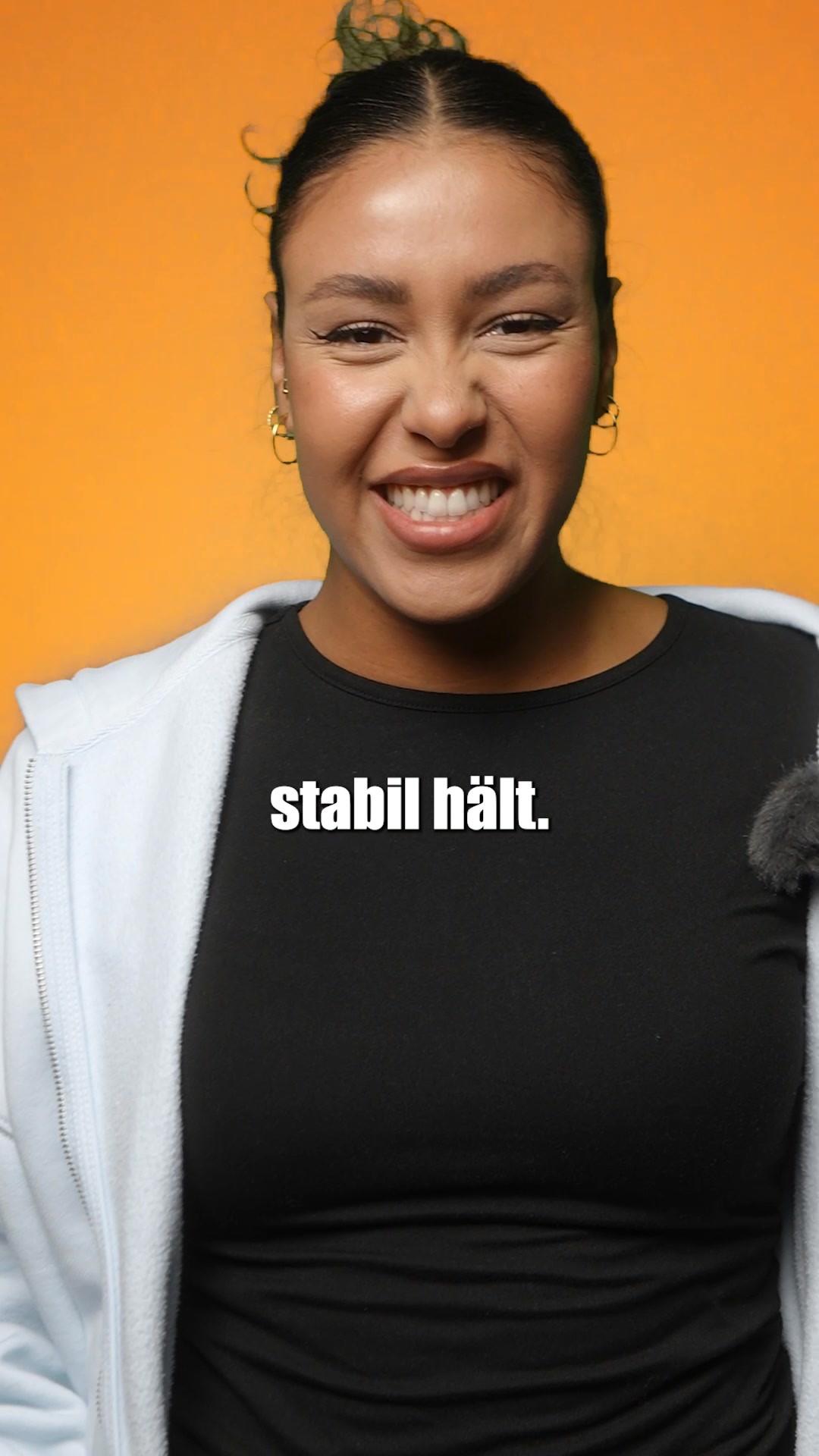
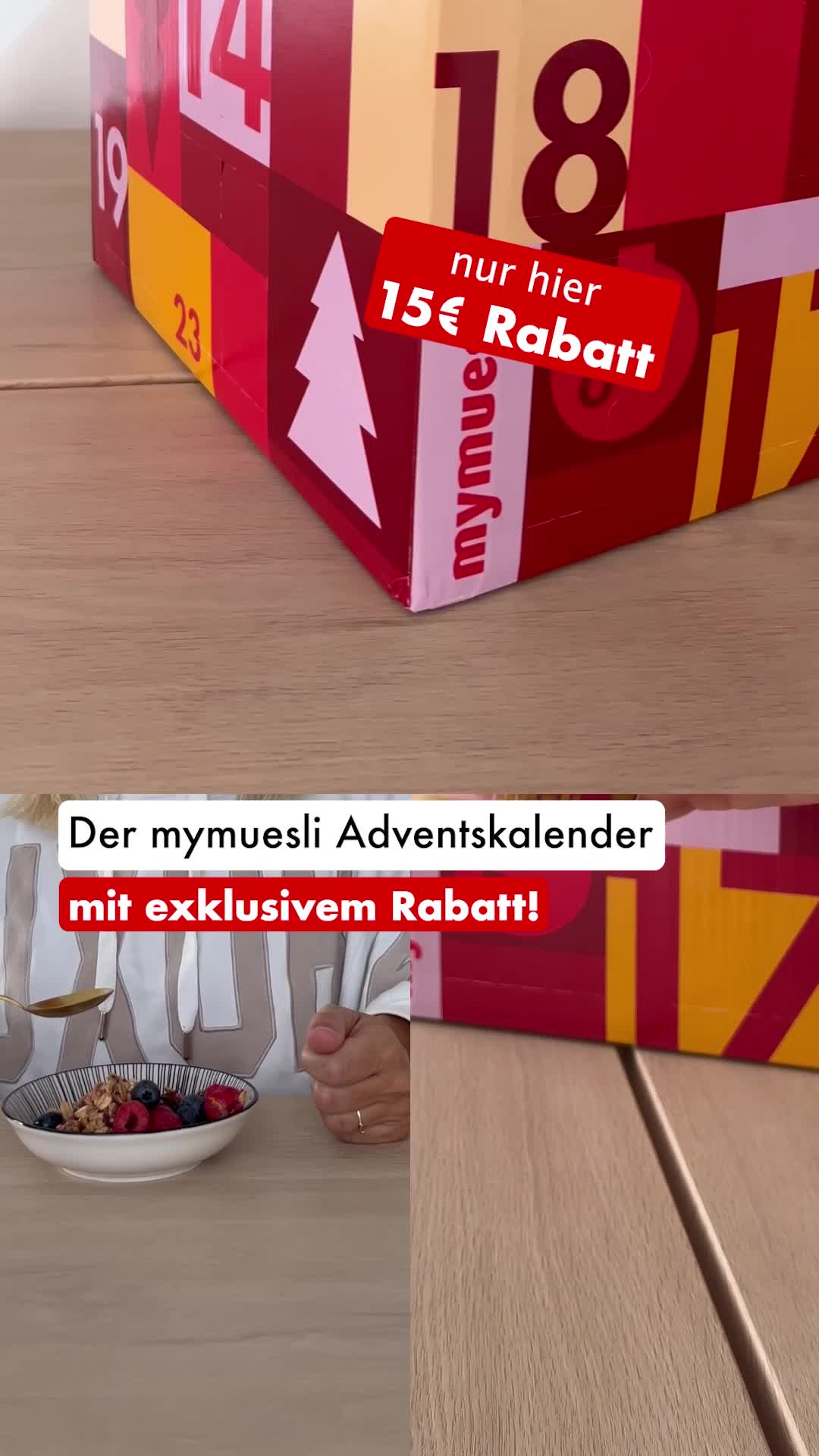
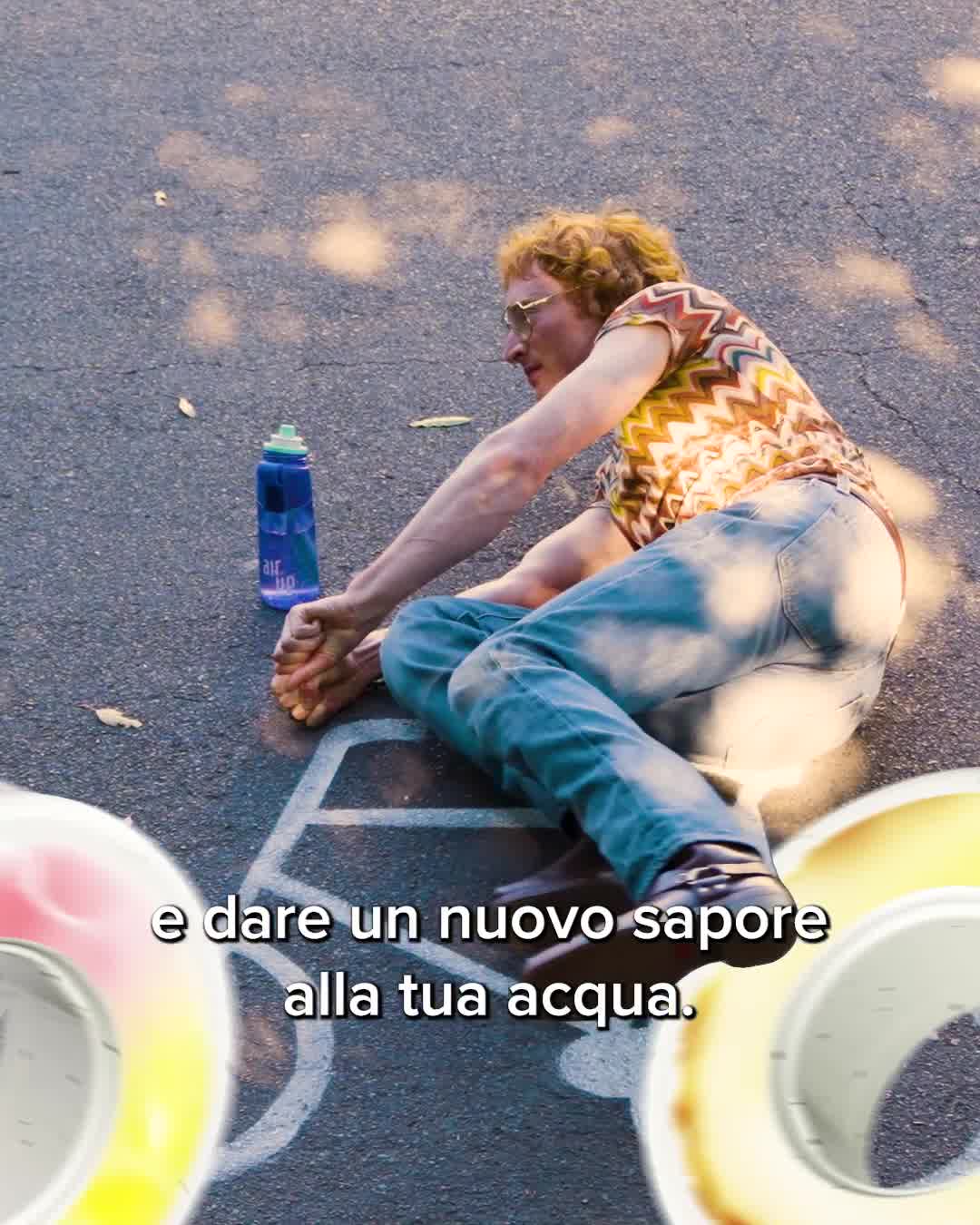
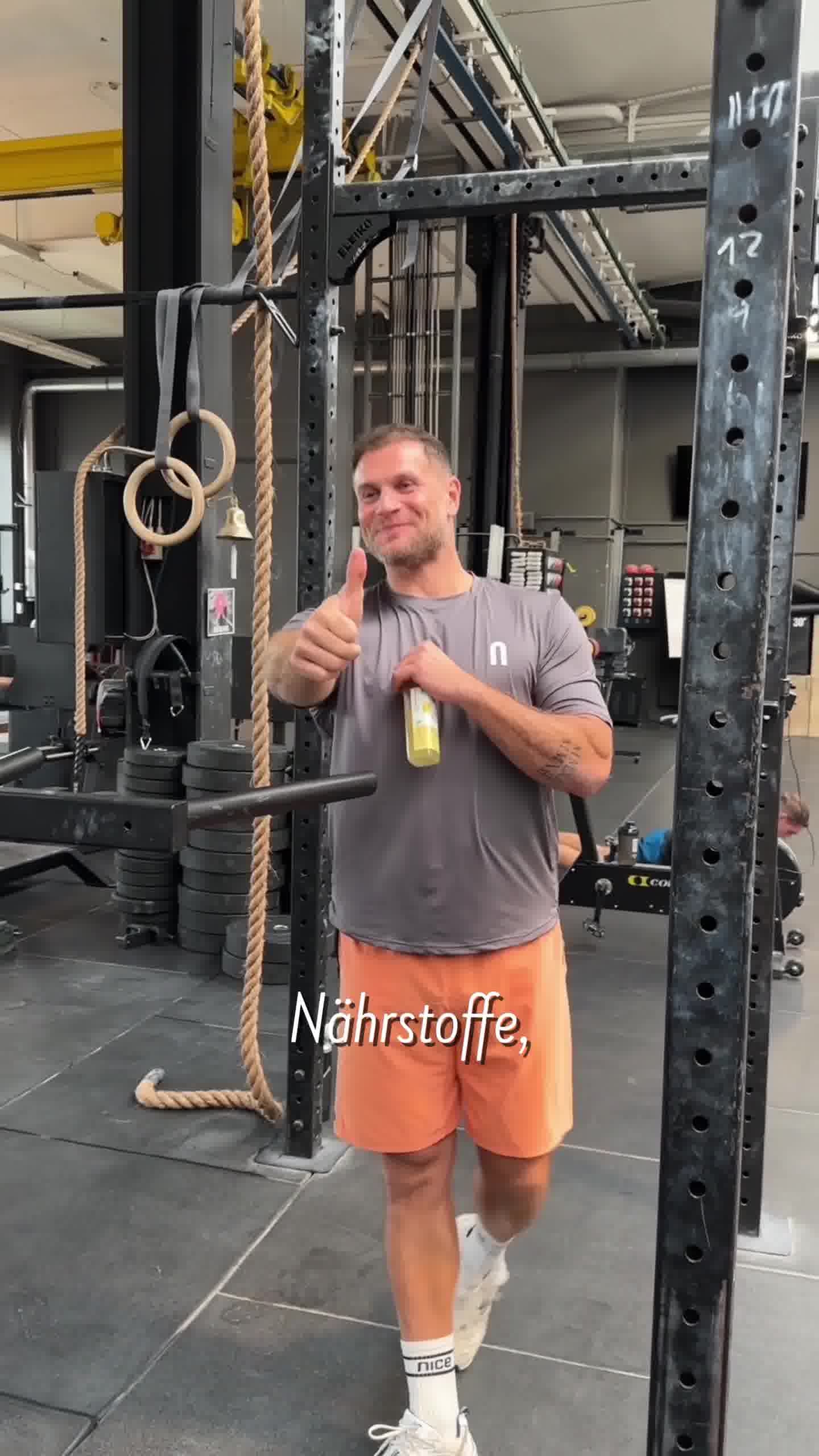

The Food & Beverages hub gathers the highest-reach Meta ads for food, drinks and snacks running on Facebook and Instagram. These are the creatives that keep pulling budget because they keep converting, from thick shake pours and freezer meal-prep clips to sugar-cube shock openers and results-driven diet stories. Use them to see the hooks, offers and product demos that stop the scroll in this category.
Key takeaways
- Video carries the category. Across 135 top ads the split runs 62% video to 38% image, so motion is the default format for the highest-reach food and beverage creatives. Static images still work, but they win by leaning on a bold offer or a clean product shot rather than a claim.
- Broad reach, long lifespans. The median ad in this hub reached 4.6M people and the top example hit 12M, across 31 distinct advertisers. Winners stay live for a long time: the average run is 163 days, a signal that these creatives keep earning their spend.
- Sell the result, not the ingredient. The strongest creatives pair a specific outcome with a simple mechanic, such as a first-person juice-cure story ticking off a concrete weight-loss result or a two-shake routine promising a fixed number of kilos in a set number of weeks. A tangible payoff makes the claim feel proven rather than promised.
- Make the product do the work. Sensory demos carry many of these ads: a slow, thick shake pour, a meal pulled from the freezer and plated, a cube dropped into water. Showing texture and appetite appeal on screen sells the drink or snack without a single line of copy.
What makes a winning Food & Beverages ad
A high-performing creative here opens with a fast, tangible hook: a macro sugar-cube shot that names the enemy, a satisfying pour, or a bold discount headline that fills the frame. It then delivers proof through demonstration, either a first-person result stacked as ticked-off story stickers or the product visibly doing its job, so the viewer believes the claim before they read it. The offer is explicit, whether that is a percentage-off deal or a simple two-shake-a-day mechanic tied to a specific outcome, and the call to action points straight to trying it. The best ads feel native to the feed, framed as a comment reply or a personal story rather than a polished commercial.
What the top Food & Beverages ads look like
Scanning the highest-reach ads, you see product front and centre: a hand tilting a bottle to pour a thick shake into a glass on a dark kitchen counter, a shaker fanned out beside the full range, a fridge lined with juice bottles. Many borrow native feed styling, with comment-reply stickers, story-format tick marks and screenshot framing that makes the pitch read like a real follower or a personal after-diary. On-screen text is loud and specific: a big percentage-off badge, a red-highlighted problem word, or a punchy equation like "1 cube = 1 drink." Demonstration frames recur, from powder scooped into a shaker to a meal lifted from the freezer and plated. Overall the format leans toward motion, at 62% video and 38% image.
Prefer one format? Filter this page to Food & Drink video ads or Food & Drink image ads only.
Winning ad frameworks in Food & Drink
The highest-reach Food & Drink ads reuse a handful of proven creative frameworks. Here are the ones that stand out here, each with a real example you can play or open in full.
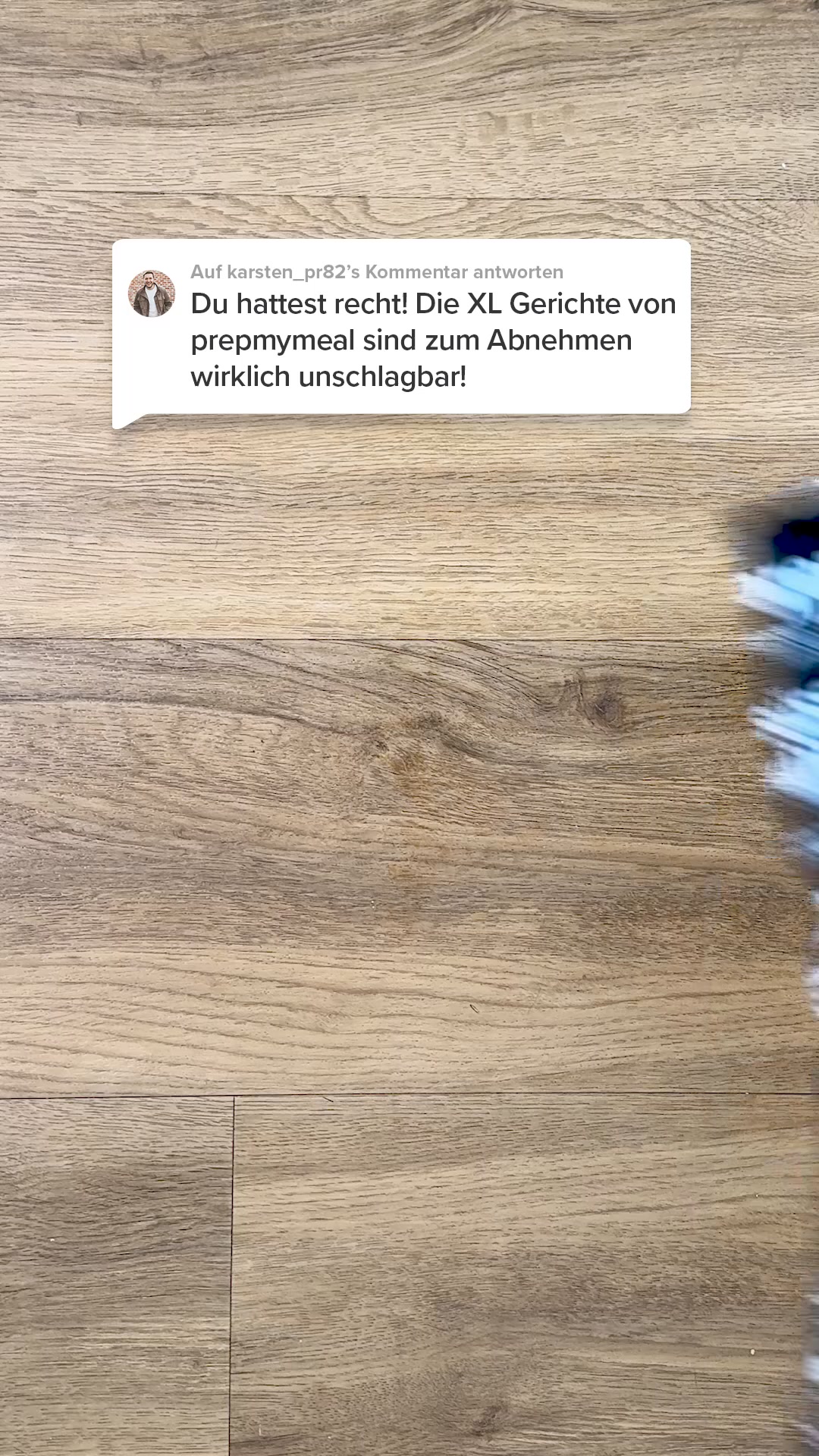
1. Comment-reply meal-prep flex
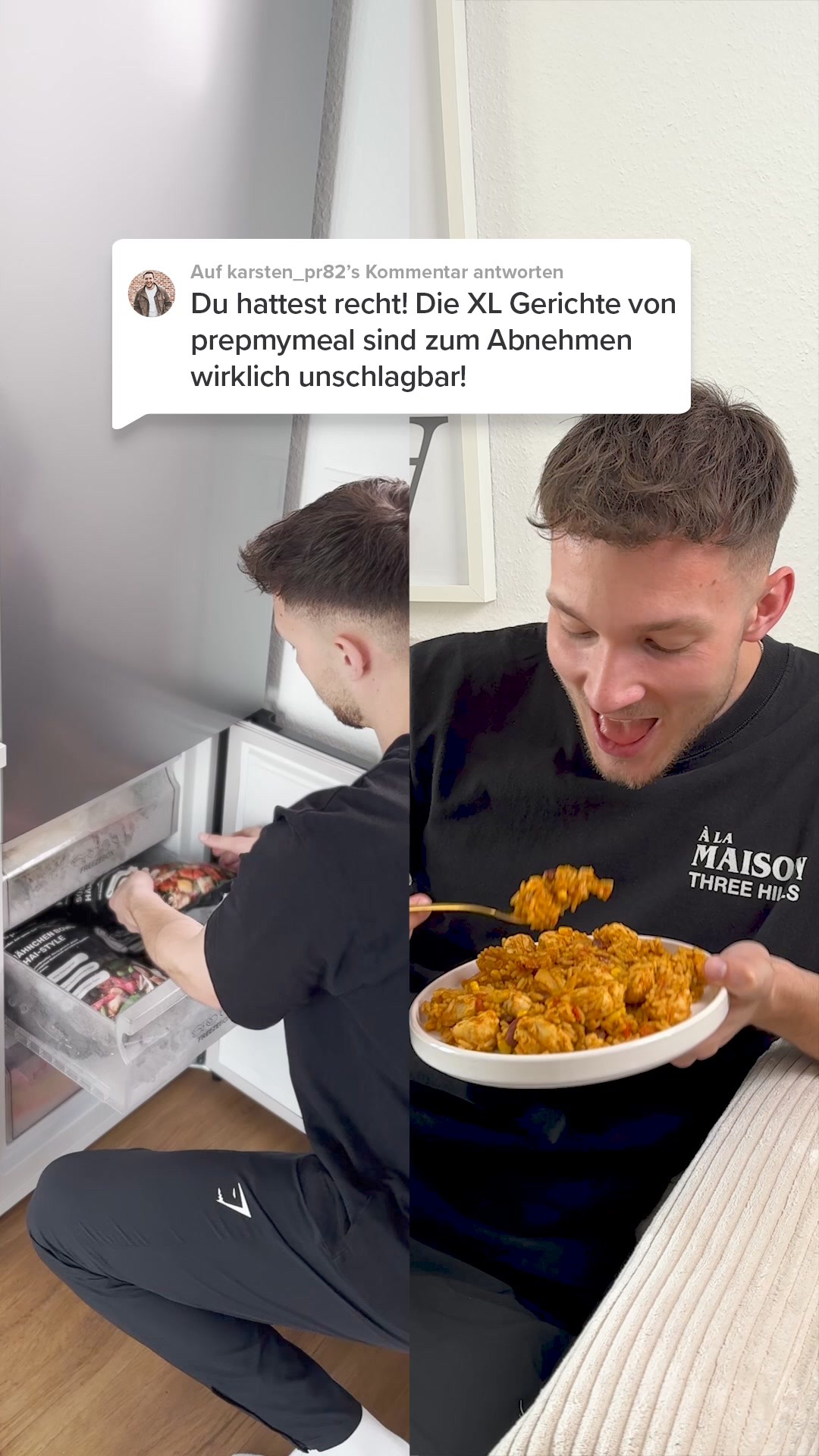
What it does. The ad opens with a native Instagram comment-reply sticker ("Auf karsten_pr82's Kommentar antworten") answering a fan who says the XL dishes are unbeatable for losing weight, then splits the screen between the creator pulling a meal from the freezer and him eating a full plate of chicken and rice. It reads as an organic reply to a real follower rather than a produced ad.
Why it works. Framing the pitch as a reply to a real comment borrows social proof and looks organic in the feed, so the viewer trusts the claim before realising it is an ad.
Ad data. Ran as a video for 527 days and reached 12M, the joint highest reach in the category. Gender split: 22% women / 78% men.
2. Sugar-cube shock opener
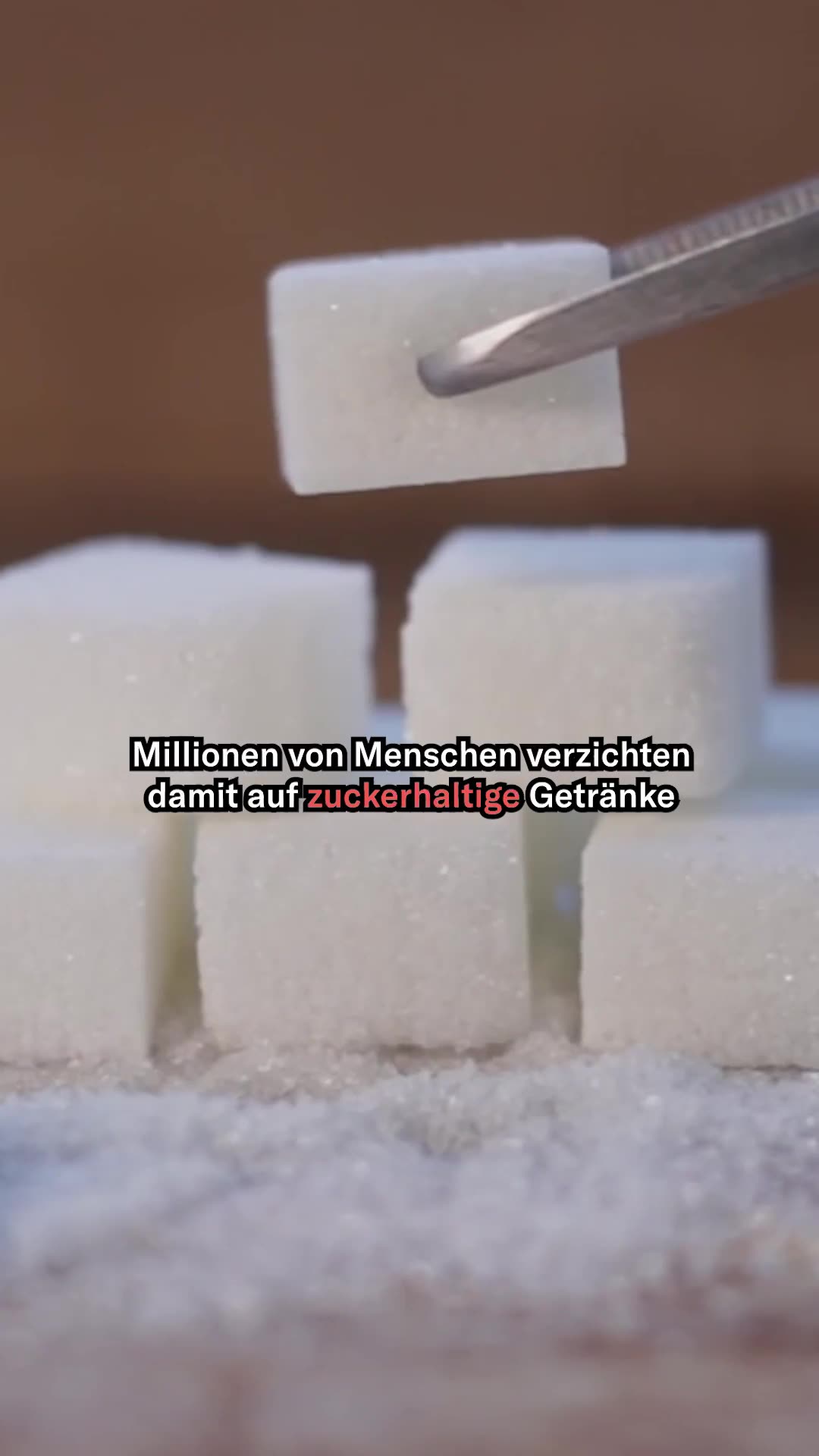
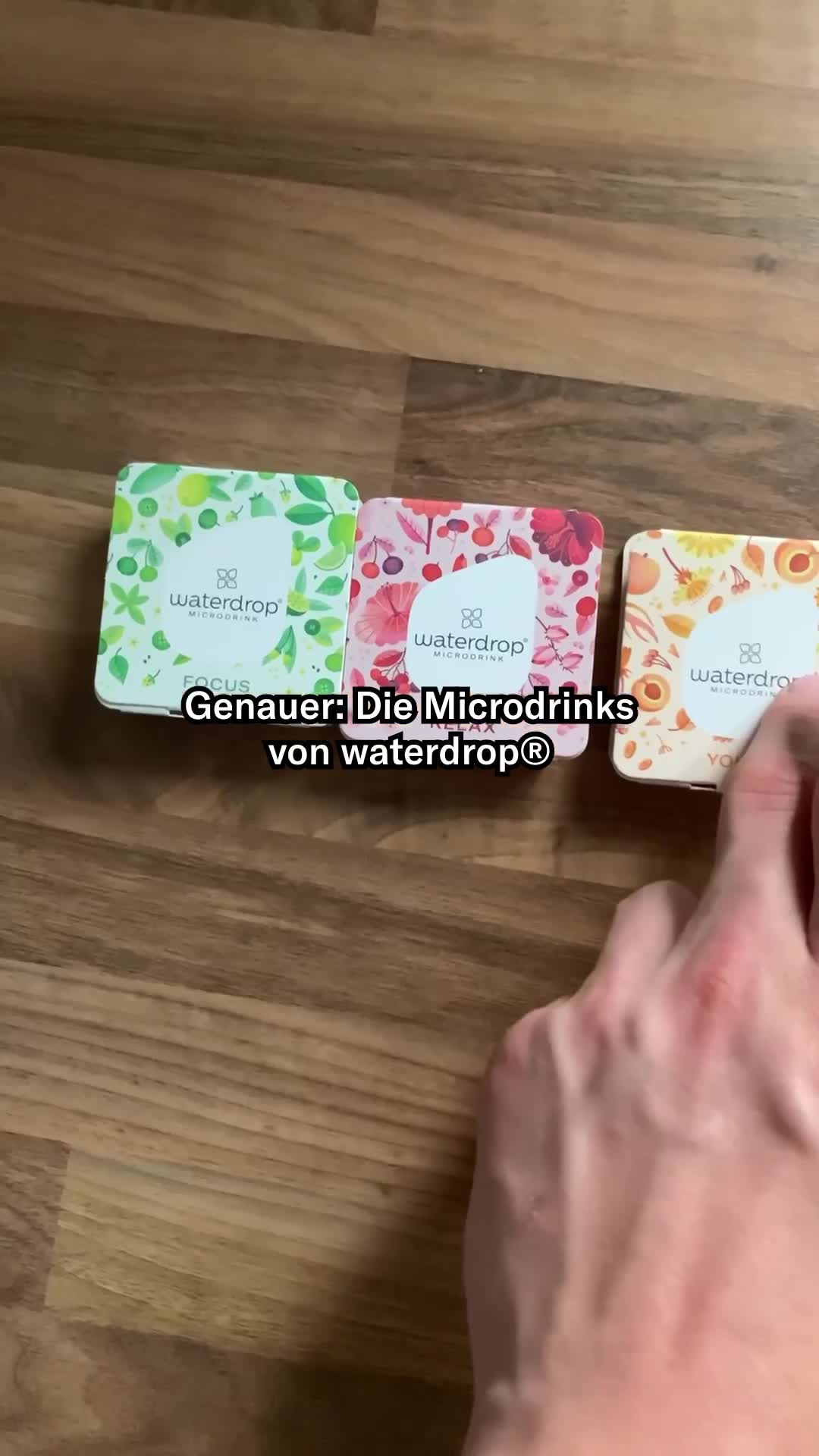
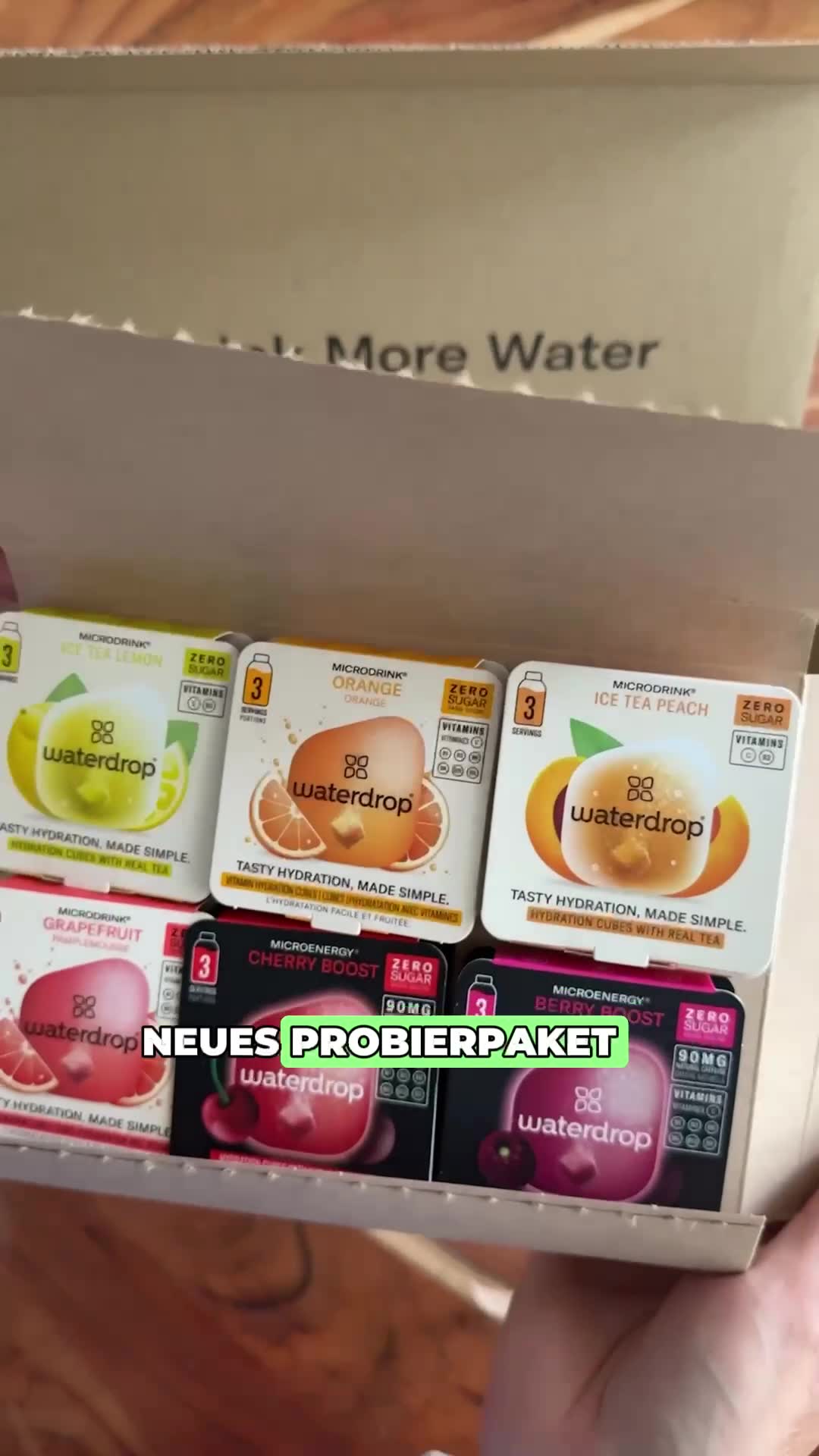
What it does. The ad opens on a macro shot of tweezers lifting a sugar cube above a wall of stacked cubes, with the caption highlighting "zuckerhaltige" (sugary) drinks in red as the problem, before pivoting to waterdrop's zero-sugar cubes. The visual makes the hidden sugar in normal drinks tangible.
Why it works. Leading on the enemy (sugar) made physical and oversized agitates the problem in one frame, so the sugar-free product lands as the obvious fix.
Ad data. Ran as a video for 608 days and reached 10M. Gender split: 47% women / 53% men.
3. Minus-kilos juice-cure proof
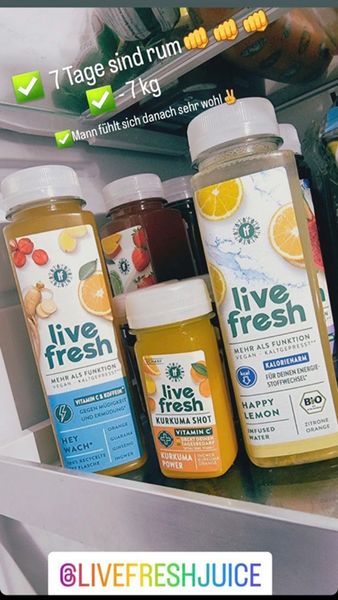
What it does. Styled like an Instagram story of a fridge full of LiveFresh bottles, the ad stacks green tick stickers reading "7 Tage sind rum", "-7kg" and "Mann fühlt sich danach sehr wohl" as a first-person result. It reads as a personal after-diary tagged @livefreshjuice.
Why it works. A concrete result (-7kg in 7 days) delivered as someone's own ticked-off story feels like real proof rather than a brand claim, which is highly persuasive for a diet drink.
Ad data. Ran as an image for 805 days, the longest run in the category, and reached 12M. Gender split: 73% women / 27% men.
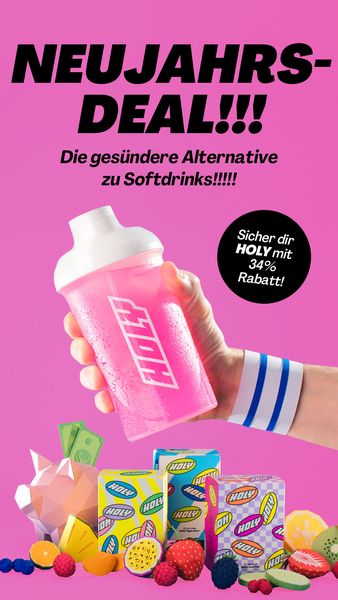
4. Loud New Year deal hook
What it does. The whole frame is a bold black-on-pink "NEUJAHRS-DEAL!!!" headline with a "HOLY mit 34% Rabatt" badge, a hand holding a pink shaker and the full product range fanned out below. The discount, not the product, is the hook.
Why it works. A single unmissable percentage-off headline plus a seasonal reason to buy turns the offer itself into the scroll-stopper and drives urgency.
Ad data. Ran as an image for 475 days and reached 9.1M. Gender split: 47% women / 53% men.
5. Satisfying shake pour demo
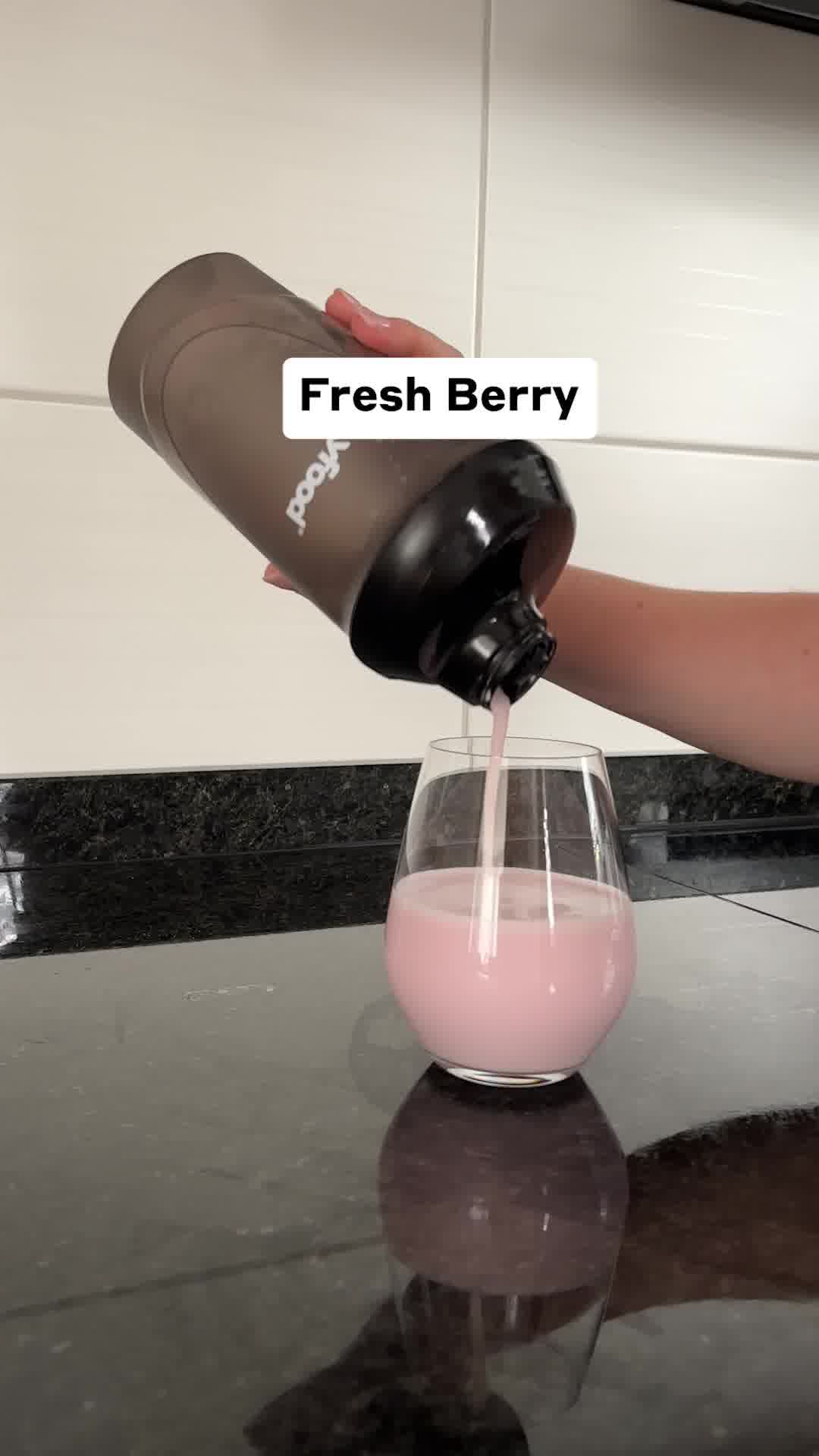
What it does. A close POV shows a hand tilting a yfood bottle and pouring a thick pink shake into a glass on a dark kitchen counter, captioned "Fresh Berry". The product doing its job (a smooth, appetising pour) is the entire creative.
Why it works. The slow, satisfying liquid pour is a scroll-stopping sensory visual that shows texture and appetite appeal without needing any claim.
Ad data. Ran as a video for 167 days and reached 7.8M. Gender split: 48% women / 52% men.
6. Cinematic doorway delivery moment
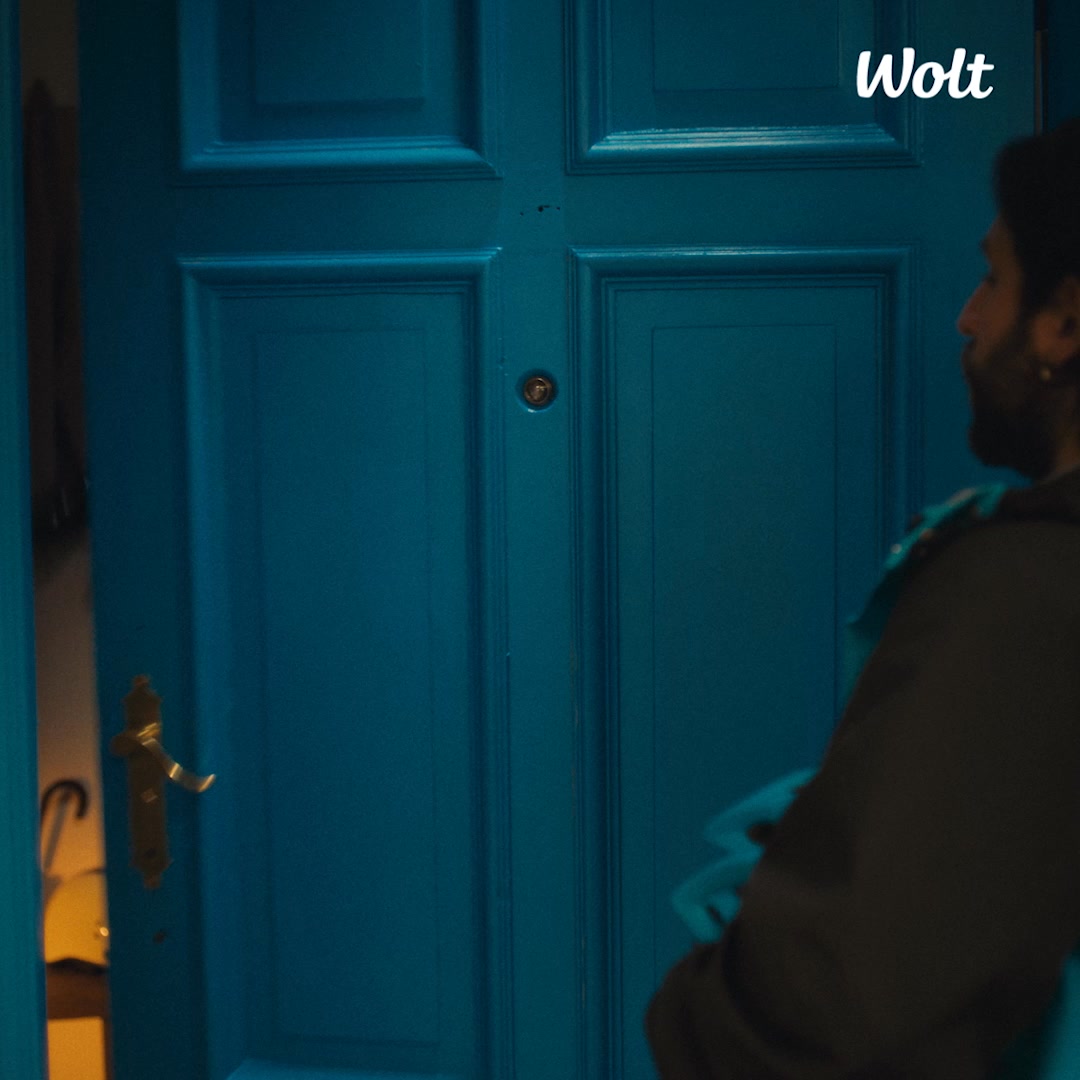
What it does. A moody, film-lit scene shows a courier at a deep-blue front door in warm lamplight with only the "Wolt" logo, selling the arrival moment as an emotional beat rather than the food. The copy frames it as "euer schönster Moment des Tages".
Why it works. Treating delivery as a warm, cinematic story rather than a transaction builds brand feeling and stands out against the category's product-shot ads.
Ad data. Ran as a video for 6 days yet still reached 7.5M, unusually high reach for such a short flight. Gender split: 40% women / 60% men.
7. Two-shakes weight-loss explainer
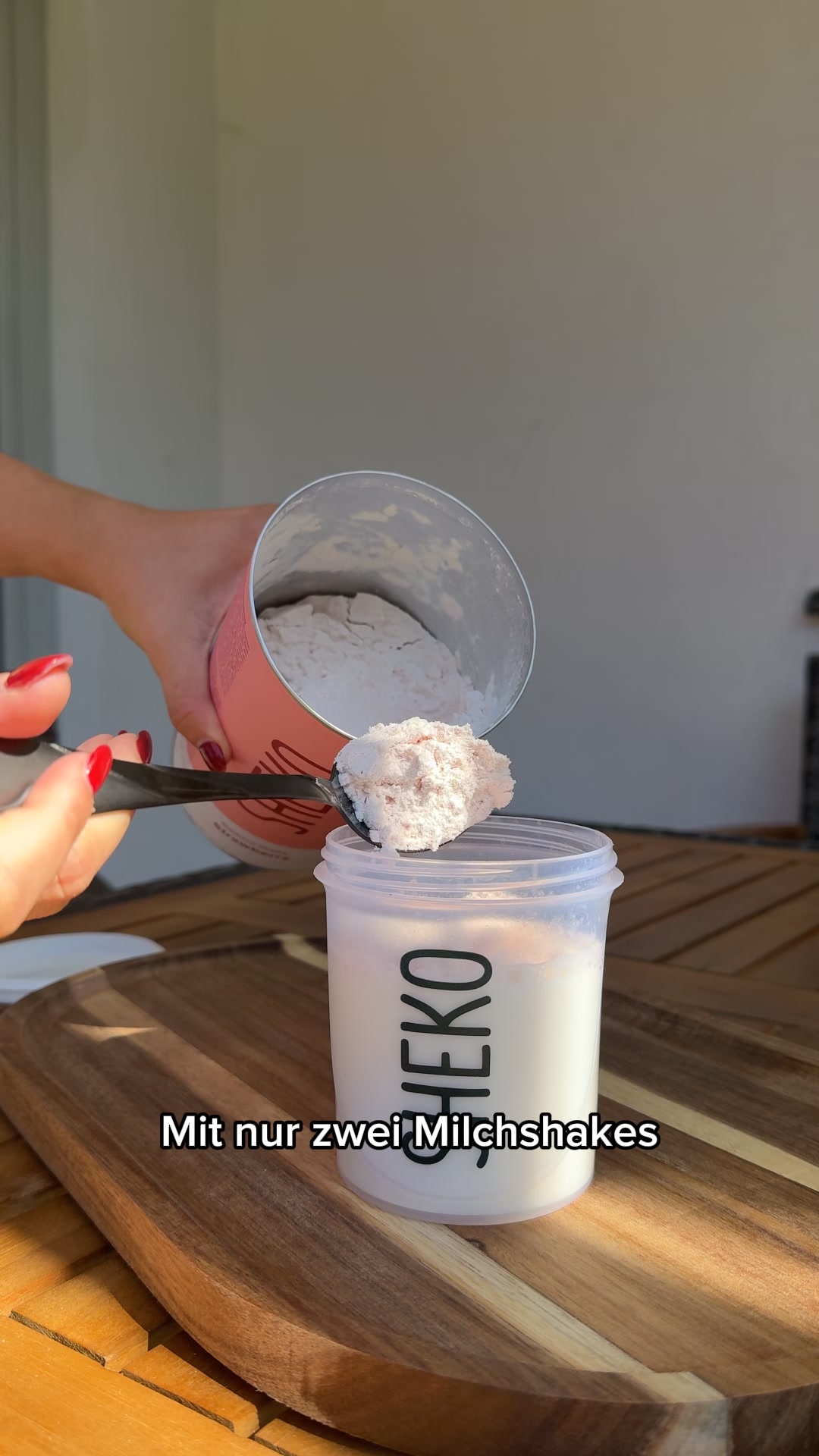
What it does. The ad demonstrates the routine, scooping strawberry powder into a branded SHEKO shaker with the caption "Mit nur zwei Milchshakes", while the copy promises "-8kg in 8 Wochen ohne Verzicht" by replacing two meals a day. It walks through exactly how the diet plan works on screen.
Why it works. Showing the simple two-shake mechanic alongside a specific result makes the weight-loss claim feel achievable and easy, lowering the barrier to try.
Ad data. Ran as a video and reached 7.8M (run days not recorded in the data). Gender split: 82% women / 18% men.
Food & Beverages ad best practices
- Open on the payoff or the enemy. Lead the first frame with something tangible: a thick pour, a plate of food, or an oversized problem like a wall of sugar cubes. Naming the enemy in one visual makes your product land as the obvious fix before the viewer scrolls past.
- Show the mechanic on screen. Demonstrate exactly how the product works, such as scooping powder into a shaker or pulling a meal from the freezer and eating it. Watching the simple routine play out lowers the barrier to trying the drink, snack or meal plan.
- Borrow native feed formats. Frame the ad as a comment reply, an Instagram story with tick stickers, or a personal after-diary rather than a produced spot. Creatives that look organic borrow social proof and earn trust before the viewer clocks that it is an ad.
- Put a bold offer in the frame. When the hook is a deal, make the percentage-off number and a reason to buy the biggest element on screen. A single unmissable discount headline can be the scroll-stopper itself and drives urgency to act.
About this dataset
This page draws on a curated dataset rather than a complete archive of every Meta ad. Only the highest-reach Facebook and Instagram ads per industry make it in, which means the figures describe the top performers we track rather than the platform as a whole. Every reach figure is Meta-reported EU-transparency data, broken down by gender, age and country; none of it is estimated on our side. The one number we derive ourselves is estimated spend, which we back out of the reported reach at an assumed 5 to 30 EUR CPM.
The raw ad data is collected via top-ads.io. The Ad Library itself is a free resource from adtribute, an attribution and analytics platform that shows which channels and touchpoints actually drive your revenue.