

In short
- Founded as EnquireLabs. Rebranded to Fairing
- Embeds short surveys in the post-purchase Shopify checkout confirmation page
- The flagship use case: "How did you hear about us?" as a self-reported attribution signal
- Reveals offline and word-of-mouth channels that pixel-based tracking can never see
What is Fairing
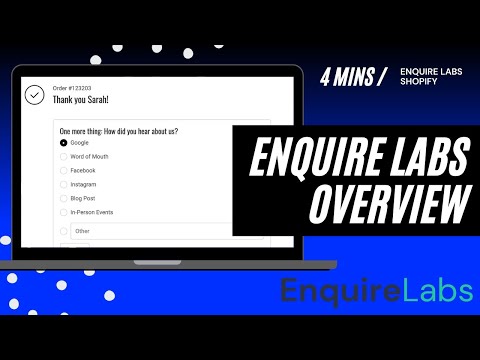
Fairing (rebranded from EnquireLabs) is a post-purchase survey platform built specifically for e-commerce. It embeds short surveys in the Shopify checkout-confirmation page, typically 1-3 questions that customers answer immediately after completing a purchase, before navigating away.
The flagship use case is self-reported attribution: asking new customers “How did you hear about us?” with a curated list of options (Meta, Google, podcast, friend recommendation, TV ad, billboard, etc.). The data flows into the attribution layer as a parallel signal alongside deterministic tracking.
Why self-reported attribution matters
Deterministic tracking captures what it can see: ad clicks, organic searches, direct visits. It cannot capture:
- Offline channels, TV, radio, billboards, OOH, podcasts (no click signal)
- Word-of-mouth, friend recommendations, social mentions, organic creator content
- View-through influence, saw the ad, didn’t click, bought later
- Cross-device journeys, saw the ad on phone, bought on desktop weeks later
For brands running serious offline or word-of-mouth marketing, the gap between tracked attribution and reality is significant. Fairing surfaces it.
How the data flows
- Customer completes purchase on Shopify
- Confirmation page shows a Fairing question: “How did you hear about us?”
- Customer selects an option
- Fairing logs the response tied to the order
- Data syncs to attribution platform alongside deterministic touchpoints
The combined view, tracked attribution + self-reported attribution, is more honest than either alone. Tracked attribution over-credits last-touch digital channels. Self-reported attribution under-counts brand recall but captures channels deterministic tracking misses entirely.
Use cases beyond attribution
- Customer feedback, “How was your experience?” at the moment of highest engagement
- Product feedback, “What almost stopped you from buying?”
- Segmentation, capture demographic or psychographic data for downstream targeting
- NPS measurement, net promoter score immediately post-purchase
FAQ about Fairing
How much does Fairing cost?
Fairing pricing is order-based: free up to 100 orders/month, $15/month up to 200 orders, $49/month up to 500 orders, $99/month up to 1K orders, $149/month up to 5K orders, and $199/month up to 7.5K orders. A 14-day free trial is included.
What is Fairing used for?
Fairing runs post-purchase surveys on Shopify, most commonly the ‘how did you hear about us?’ question. The answers are used as a self-reported attribution data source to complement pixel-based tracking that has gotten less reliable after iOS 14.
What does Fairing integrate with?
Fairing integrates with Klaviyo, Google Sheets, Elevar, Shopify Flow, and around 20 other tools. Survey responses can flow directly into attribution platforms and CDPs, so PPS data becomes usable inside your existing reporting.
Is Fairing only for Shopify?
Fairing is Shopify Plus Certified and is built specifically for Shopify. It is not designed for non-Shopify stacks.
How to use Fairing?
Install Fairing from the Shopify App Store, choose your post-purchase questions, and the survey appears immediately on the thank-you page. Setup takes about 15 minutes.
Why choose Fairing?
Fairing pioneered the post-purchase “how did you hear about us” survey for e-commerce, capturing self-reported attribution data at the highest-intent moment in the funnel.
How does Fairing work?
Fairing places a customizable survey on the Shopify thank-you page and syncs responses to Klaviyo, Triple Whale, and other attribution tools for self-reported channel data.
Is Fairing free?
No, Fairing starts at $49 per month after the 14-day trial. See fairing.co/pricing for plan details.
How to learn Fairing?
Fairing maintains documentation at help.fairing.co. Their YouTube channel has product walkthroughs and partner agencies offer paid training.
What are Fairing alternatives?
The main alternatives are KnoCommerce, Enquire Labs, and Decify for Shopify post-purchase surveys.
What are Fairing reviews?
Fairing is rated 4.9 on G2 with 18 reviews. See the reviews for detailed feedback.
Does Fairing have an API?
Yes, Fairing provides a REST API for survey response retrieval. Documentation is at fairing.co/api.
Does Fairing have a trial or a demo?
Yes, Fairing offers a 14-day free trial. Sign up at fairing.co.
Does Fairing have AI?
Yes, Fairing surfaces AI-generated attribution insights, with weekly personalized summaries that identify patterns across post-purchase survey responses without manual analysis. The core Question Stream product remains a Shopify post-purchase survey engine.
Fairing pricing
Fairing pricing starts at $49/mo. Billing: Order-volume based. A 14 days free trial is available. See the full Fairing pricing page for current tiers and any add-ons.